

TRACE comes to a close: Three Years of Innovation, Collaboration and Smarter Logistics

After three years of research, development, testing and collaboration, the TRACE project has reached its completion, marking the end of an exciting journey towards more connected, collaborative and sustainable logistics in Europe.
Funded by the European Union under Horizon Europe, TRACE brought together 28 partners from 11 European countries, coordinated by the National and Kapodistrian University of Athens (NKUA), around a common challenge: how can logistics operations work better together?
Rather than looking at individual transport modes, operators and systems in isolation, TRACE explored how they can be connected and coordinated through a common digital environment – helping logistics stakeholders make better use of available resources, respond to disruptions and move towards more efficient and sustainable operations.
For InCites Consulting, which led the project’s Communication, Dissemination and Exploitation activities, it has been a privilege to follow and support this journey from its early stages – from communicating TRACE’s initial vision to sharing increasingly tangible technologies, demonstrations, results and lessons with the wider logistics community.
From an idea to an integrated logistics platform
At the heart of TRACE was the development of an integrated platform for intelligent and synchromodal logistics.
The platform brought together planning, optimisation, real-time data exchange and event management capabilities, supported by technologies including artificial intelligence, cloud and edge computing, blockchain and advanced communication technologies.
The goal was practical: to enable different logistics actors, systems and transport modes to exchange information and coordinate their operations more effectively.
Over the course of the project, this evolved from a technical concept into an integrated ecosystem designed to support first-, middle- and last-mile logistics operations and adapt plans when conditions change.
But TRACE was never only about developing technology. An equally important part of the project was putting that technology to work in realistic conditions.
Putting TRACE to the test across Europe
TRACE demonstrated and validated its solutions through pilots in Greece, Italy and Slovenia, each addressing different logistics environments and challenges.
In Greece, TRACE explored synchromodal freight operations connecting Thessaloniki and Athens, alongside last-mile logistics scenarios, demonstrating how intelligent planning and collaboration can support more efficient freight movements and responses to changing operational conditions.
In Italy, TRACE tested some particularly innovative approaches to last-mile logistics. One demonstration successfully combined cargo bikes and drones in an intermodal delivery chain, showing how different transport assets could be coordinated as part of the same logistics operation.
A second demonstration in Modena put cooperative cargo bike platooning into practice. Connected cargo bikes exchanged information and coordinated their movements, bringing together cooperative driving, vehicle communication, sensing technologies and the TRACE platform in a realistic urban environment.
In Slovenia, TRACE explored autonomous and sustainable last-mile delivery, demonstrating how new delivery technologies and autonomous solutions could become part of real urban logistics environments.
These pilots provided an opportunity to test technologies and concepts in practice, identify challenges and demonstrate what more collaborative, connected and technology-enabled logistics could look like.
More than technology
One of the important lessons from TRACE is that transforming logistics is not simply a technical challenge.
New solutions need to make sense for the people and organisations expected to use them. They require appropriate infrastructure, viable business models, trusted data-sharing arrangements, supportive regulatory environments and, importantly, cooperation between public authorities, logistics operators, technology providers, researchers and other ecosystem actors.
For this reason, TRACE also examined the business, behavioural, regulatory and socio-economic dimensions of the transition towards shared and synchromodal logistics.
The knowledge accumulated throughout the project was also translated into practical resources and recommendations, helping to carry TRACE’s experience beyond the project’s lifetime and supporting stakeholders interested in adopting collaborative, synchromodal and autonomous logistics solutions.
Making TRACE Visible, Accessible and Impactful
Developing good solutions is only part of the journey. Making sure that people know about them, understand them and can build on them is equally important. This was at the centre of InCites’ role in TRACE.
As leader of the project’s Communication, Dissemination and Exploitation activities, InCites worked closely with partners throughout the project to bring TRACE’s progress and results to the wider logistics, research, industry and policy communities.
Over the three years, TRACE was represented at dozens of conferences, workshops, exhibitions, fairs and public events across Europe. Project developments and results were shared through the TRACE website and social media channels, newsletters, videos, interviews, press and media activities, scientific publications, webinars, workshops and dedicated communication and dissemination material.
At the same time, dissemination, stakeholder engagement and exploitation activities helped connect TRACE’s results with relevant communities and supported the consortium in considering how the project’s technologies, knowledge and solutions could create value beyond its formal lifetime.
For us at InCites, one of the most rewarding parts of this work was seeing the story gradually change.
At the beginning, we were communicating a vision and a set of ambitious objectives. Towards the end, we were communicating real technologies, working prototypes, pilot demonstrations, lessons learned and concrete results.
That is perhaps one of the most satisfying parts of being involved in a European research and innovation project: seeing an idea gradually become something that can be built, tested, demonstrated, shared and taken forward.
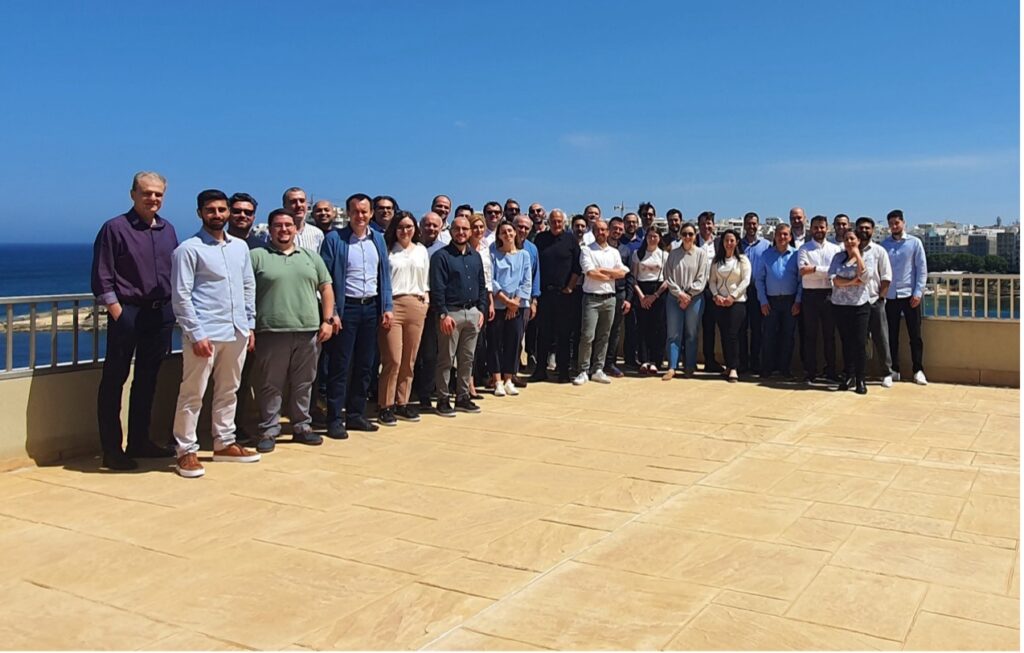
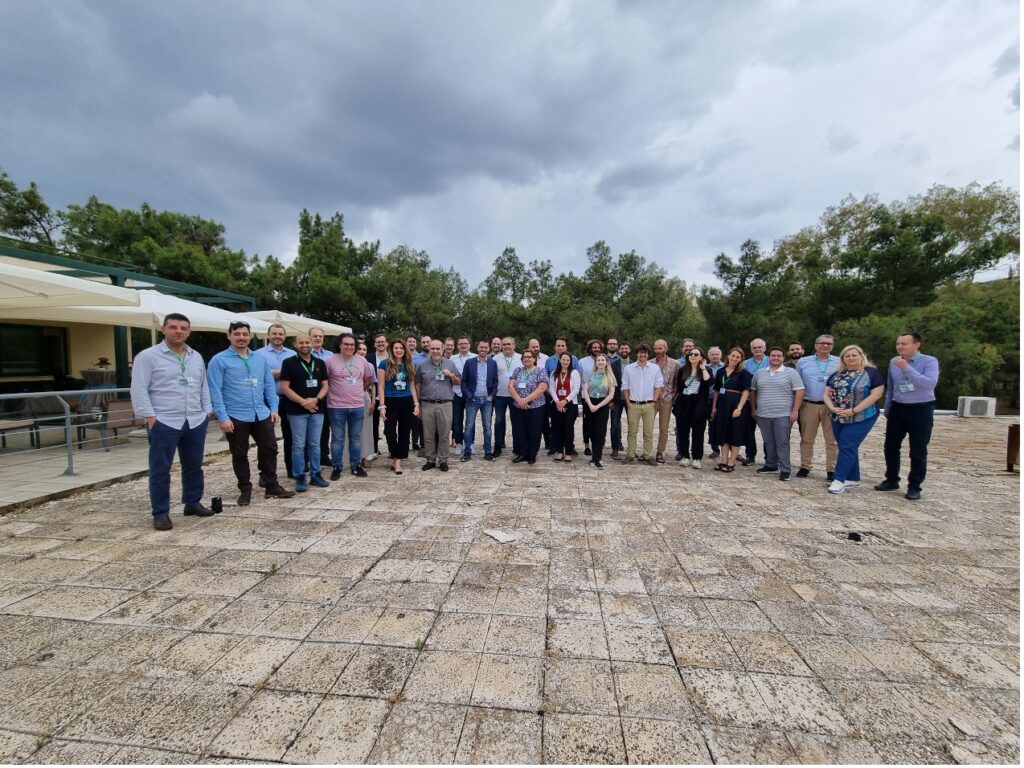
We would like to sincerely thank all TRACE partners for the excellent collaboration throughout these three years.
Thank you for the knowledge shared, the ideas exchanged, the challenges addressed together and the commitment shown throughout the project. From a Communication, Dissemination and Exploitation perspective, we are particularly grateful for the continuous contributions and support of partners in helping us communicate TRACE’s work and bring its results to audiences beyond the consortium.
TRACE leaves behind technologies and tools, knowledge and practical experience, scientific results, pilot demonstrations and, importantly, a European network of organisations and people who have spent three years working together towards more collaborative logistics.
These provide a strong basis for further research, development and uptake towards smarter, more connected, resilient and sustainable logistics in Europe.
Discover the TRACE project, its results and stories from across the three-year journey: https://trace-horizon.eu/